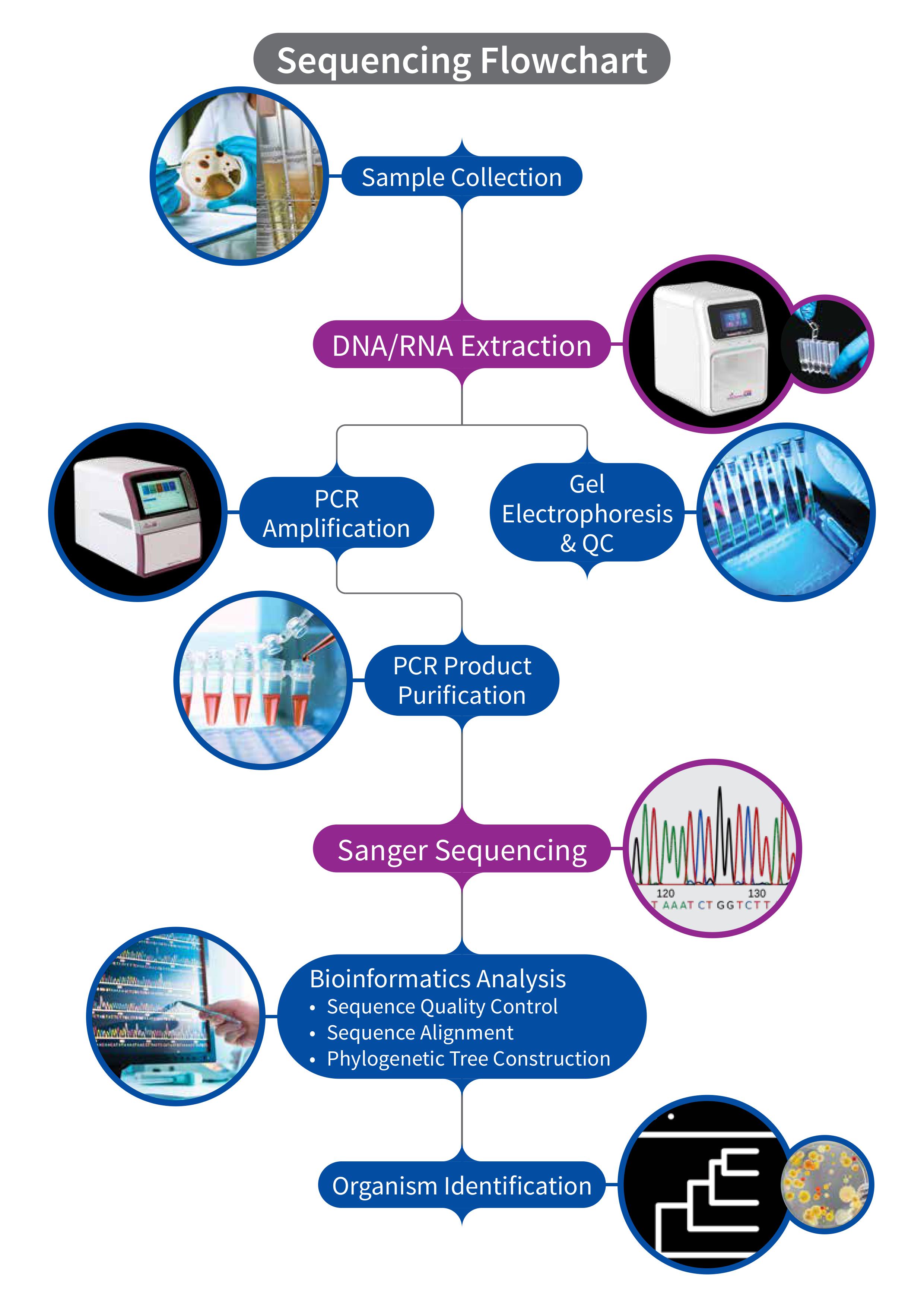
Sanger Sequencing
Introduction
Sanger Sequencing:
Sanger sequencing, also known as the chain-termination method, is a widely used technique for determining the precise sequence of nucleotides in DNA. Developed by Frederick Sanger in the late 1970s, this method relies on the incorporation of labeled dideoxynucleotides (ddNTPs) during DNA replication. Unlike regular deoxynucleotides (dNTPs), ddNTPs lack a 3'-OH group, which prevents further extension of the DNA strand once they are added. In practice, DNA polymerase synthesizes a new DNA strand using a template strand and a mixture of dNTPs and a small proportion of ddNTPs, resulting in fragments of varying lengths that terminate at each ddNTP. These fragments are then separated by size using capillary electrophoresis, and a laser reads the fluorescent labels attached to the ddNTPs, allowing researchers to infer the original DNA sequence. Sanger sequencing is known for its high accuracy and reliability, making it a standard method for sequencing small fragments of DNA, such as those derived from PCR products. Despite the widespread use of modern next-generation sequencing methods for large projects, Sanger sequencing remains a crucial tool in molecular biology. It is commonly used to identify organisms and confirm mutations, study evolutionary relationships, assist in cloning, and help create specific DNA constructs.
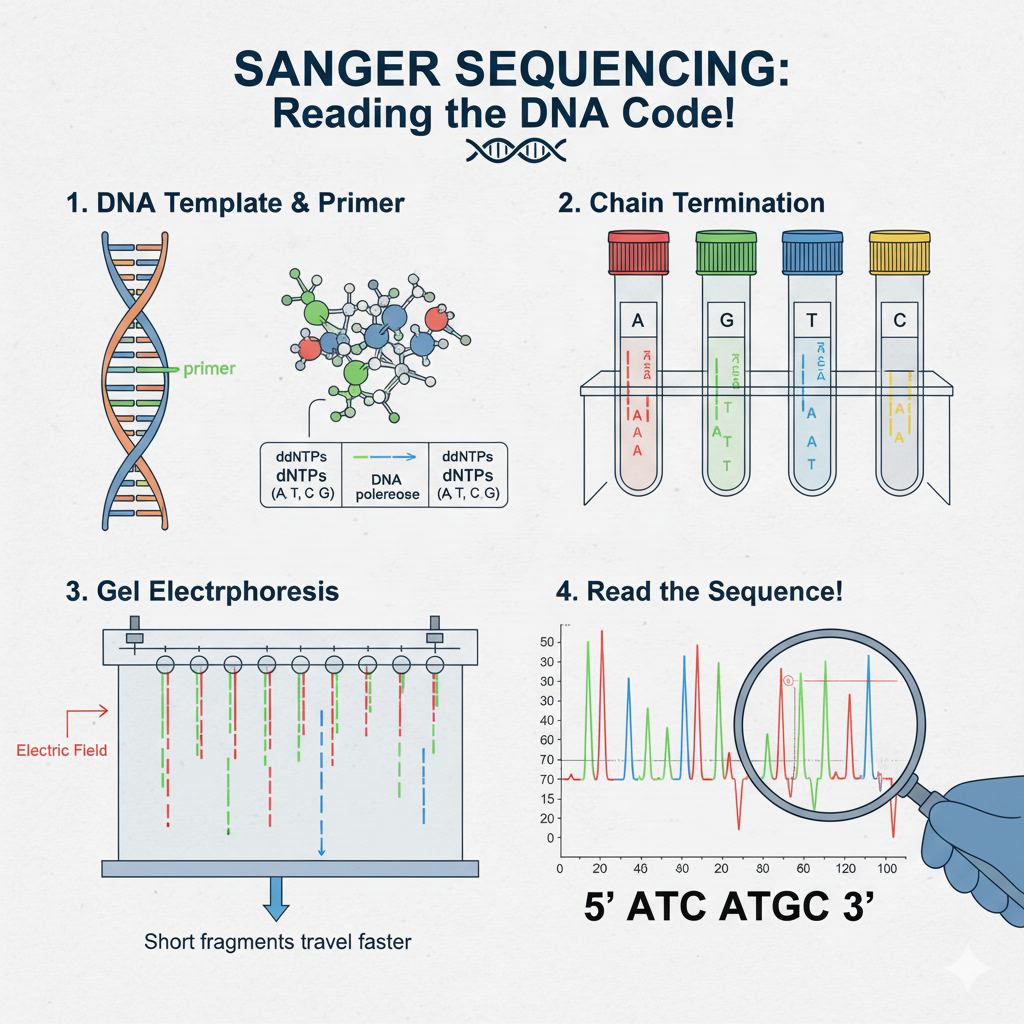
The sanger sequencing includes following steps, and the detailed illustration has been made for easy understanding of the process (Fig. 1):
DNA Isolation, PCR amplification using specific primers
Cycle sequencing PCR/ Chain termination reaction
Gel Electrophoresis/ Capillary electrophoresis
Analysis of RAW data/ electrophorograms
Sequencing and Its Application:
The accurate identification of organisms is fundamental in both research and clinical practice, as it directly influences our understanding of their biological roles, pathogenic potential, and environmental impact. Microbial identification presents unique challenges due to their rapid evolutionary rates and morphological similarities, which often complicate traditional diagnostic methods. Morphological analysis such as colony morphology, character along with microscopic character are valuable but frequently falls short when distinguishing closely related taxa.
One of the examples we will discuss here of genus Aspergillus:
Within the Aspergillus genus, several species exhibit near-identical morphological features, making differentiation difficult. For instance, Aspergillus brasiliensis and Aspergillus niger display almost 100% morphological similarity, with only minor phenotypic differences that are often insufficient for definitive identification. That’s where the use of molecular technique comes in picture, such as DNA sequencing, to accurately differentiate the species.
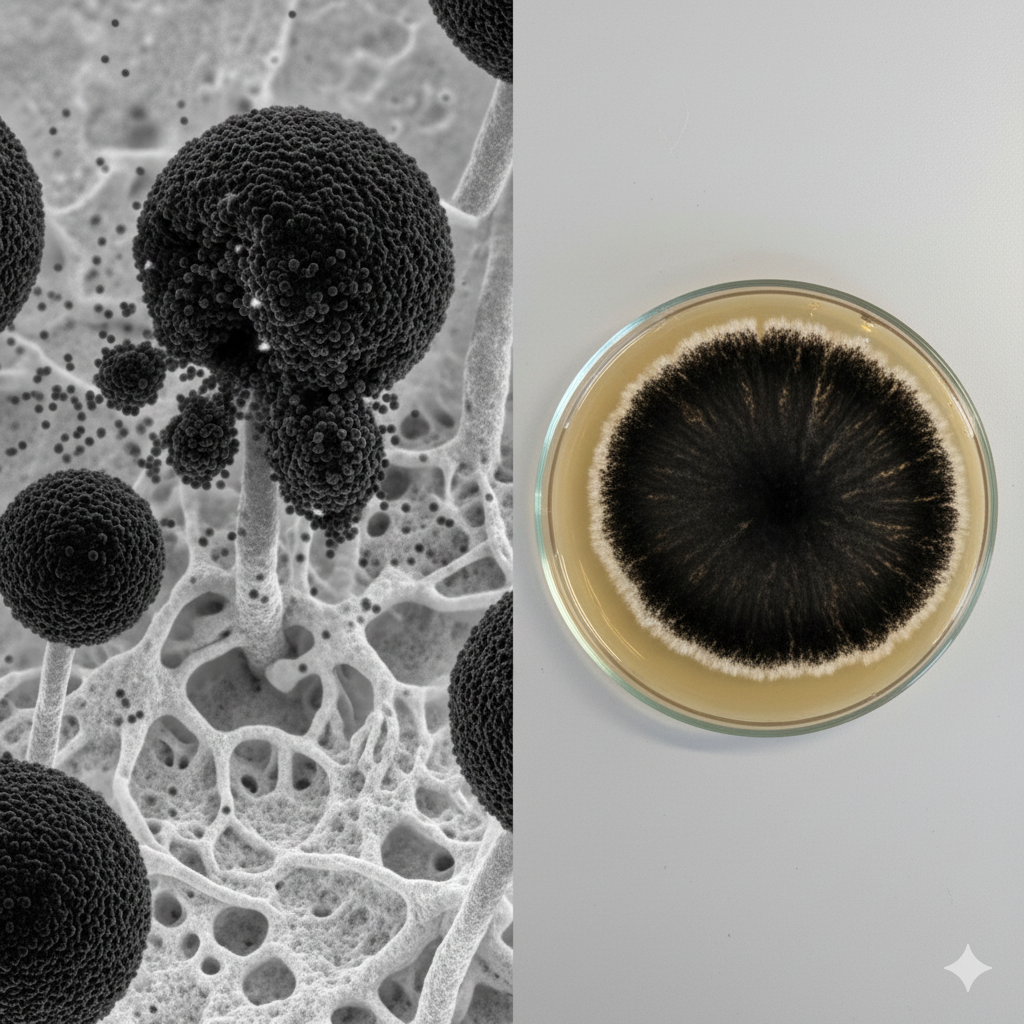
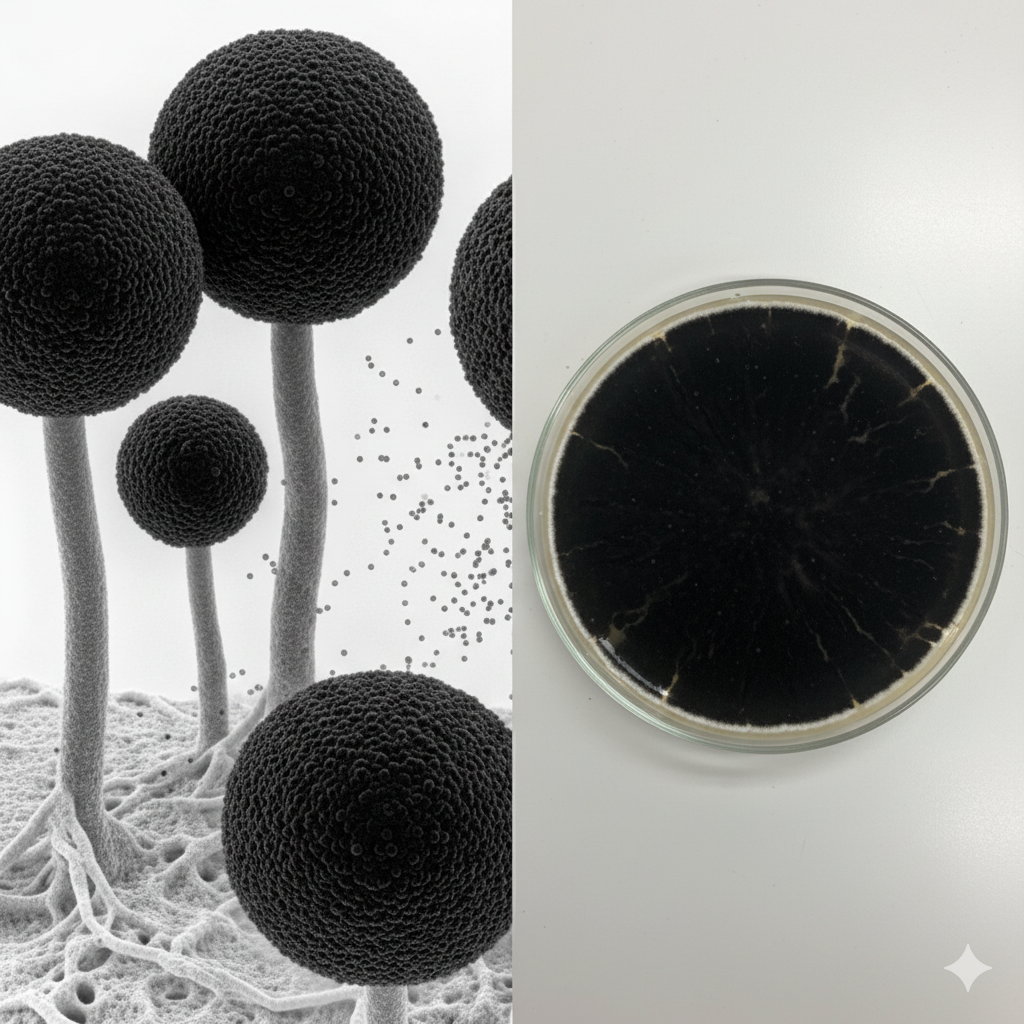
Species like A. fumigatus, A. flavus, and A. niger are well-documented for their pathogenic potential, capable of causing aspergillosis, a serious respiratory disease in immunocompromised individuals. Conversely, A. brasiliensis is recognized as an opportunistic fungus that, while not typically pathogenic, has significant industrial applications. It is extensively utilized in the production of enzymes and citric acid, highlighting its economic importance. To differentiate such complex species the DNA sequencing plays an essential role to address the challenges posed by morphological similarities and to ensure accurate, reliable identification of microbial species in various contexts. Further to understand the detailed molecular sequencing-based identification process the current kit will be very effective.