Terminology & DNA Markers
Some Common terminologies used in Sanger Sequencing:
1. Chromatogram
Represents the graphical view of raw data sequences for each base.
2. Trace QC
Reflects the quality values of each sequenced raw data (per base) , the value should be 20 and above for good base quality.
3. Peak
It is a part of chromatogram and represents the quality of each base in the form of graphical representation.
4. FASTA
A typical sequence data format read by widely used software (details provided under methodology)
5. Contig/ consensus sequence
A common sequence generated using two or more traces (such as data of forward and reverse sequences).
6. Primers
Short stretch of sequence (normally ranging from 18 to 25bp) and used for the amplification of target regions.
7. MSA
Multiple Sequence Alignment, to align the generated data with allied sequences.
8. BLAST
Basic Local Alignment Search Tool is a tool available as independent as well as a part of NCBI database.
9. Database
A unique consortium that curate, analyze and store the sequence information and make them freely available for everyone.
Selection of universal DNA barcodes/ markers for microbial identification:
ITS Based Identification (fungal/ other eukaryotes identification):
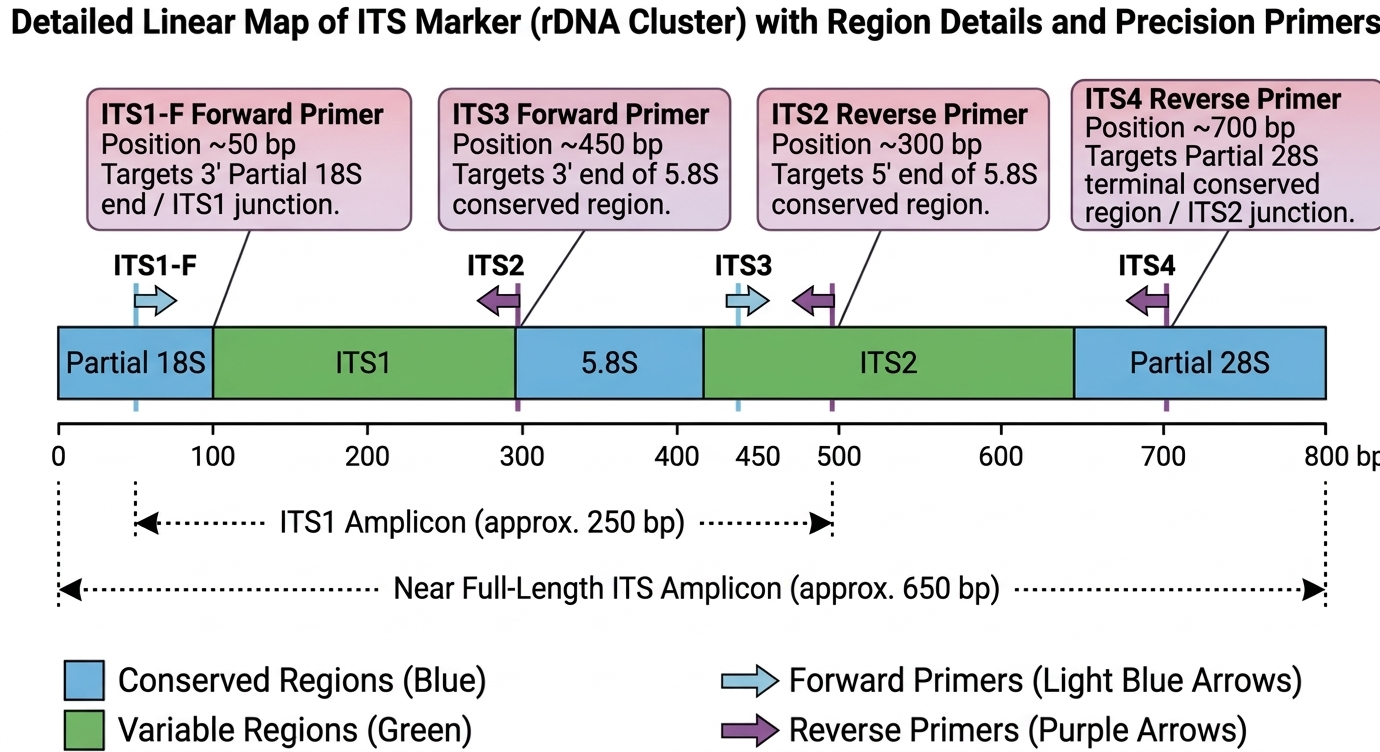
Internal Transcribed Spacer (ITS) sequencing is a molecular technique used primarily in the identification and classification of fungi and some other eukaryotic organisms. The ITS region is a highly variable segment of the nuclear ribosomal DNA (rDNA) that is situated between the small subunit (SSU or 18S) and large subunit (LSU or 28S) rRNA genes. This variability makes it an ideal marker for distinguishing closely related species and understanding phylogenetic relationships.
The ITS region consists of two main parts: ITS1 and ITS2, separated by the 5.8S rRNA gene. These regions are flanked by conserved sequences, which facilitate the design of universal primers for PCR amplification. ITS sequencing provides a reliable method for species identification, especially in fungi, making it a standard marker in molecular taxonomy and biodiversity research.
16S rRNA DNA Sequencing (Bacterial identification):
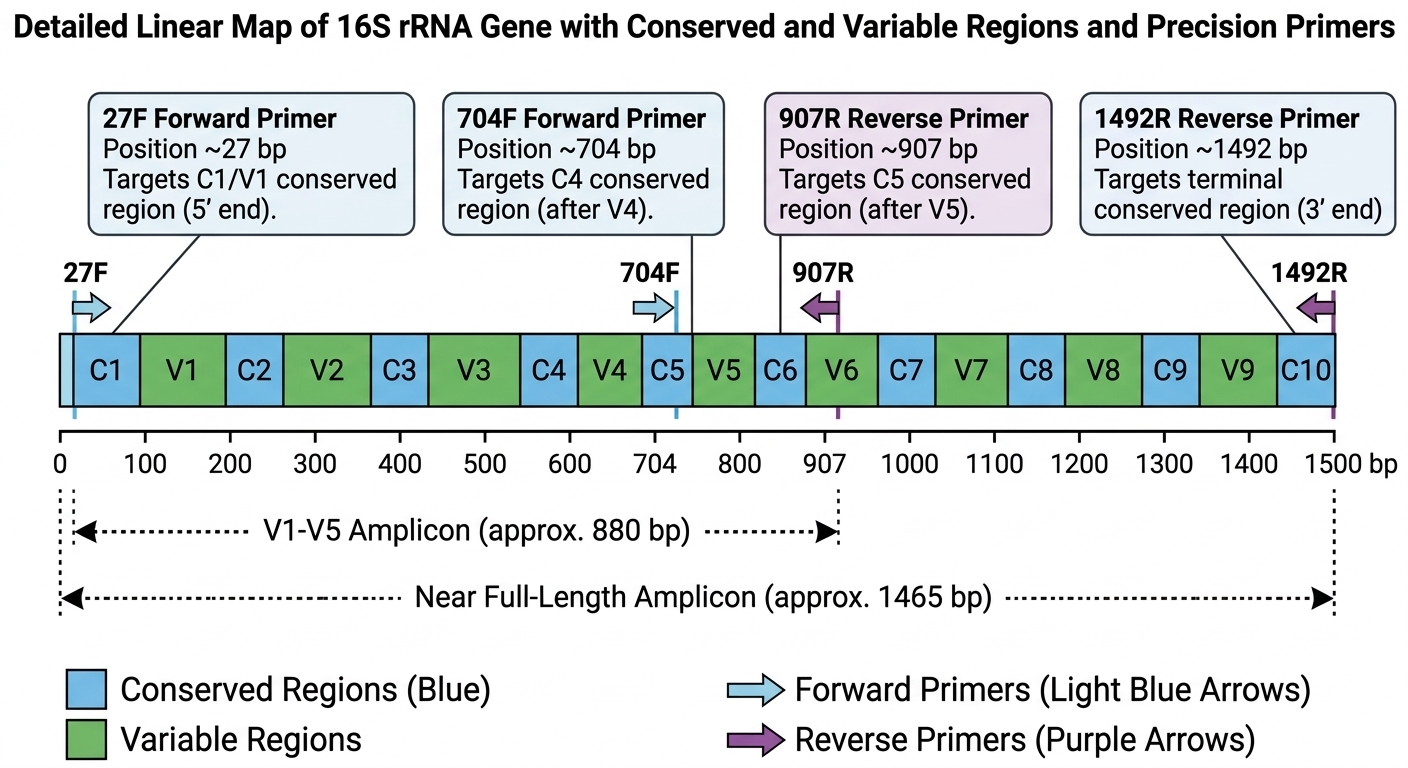
The 16S rRNA is one of the ribosomal subunits of prokaryotic organisms. The prokaryotic organisms contain two major subunits viz. 50s and 30s. The 50s consists of two subunits as 5s and 23s, whereas 30s consists of only one subunit as 16S rRNA. During evolution these genes play an important role in adaptation of organisms and helped them in translating the synthesized mRNA into functional proteins. Due to their functional properties, the coding regions of these genes are highly conserved, but at the same time they hold several mutational hotspots by holding the functional properties of the gene. At the same time upstream and downstream region of 16S gene is highly conserved throughout the prokaryotes and can be easily amplified and sequenced using some universal primers to identify organisms and understand their evolutionary relationships.